How CNC Machining and Welding in Drayton Valley Work Together to Solve Complex Repair Problems
Key Takeaways
- Combining CNC machining and welding helps restore damaged parts when replacements are not practical.
- Machining brings parts back to accurate dimensions, and welding restores strength and lost material.
- Planning the order of steps reduces rework and helps parts fit correctly at assembly.
- The mixed method is well-suited to heavy equipment repairs, where alignment and durability matter.
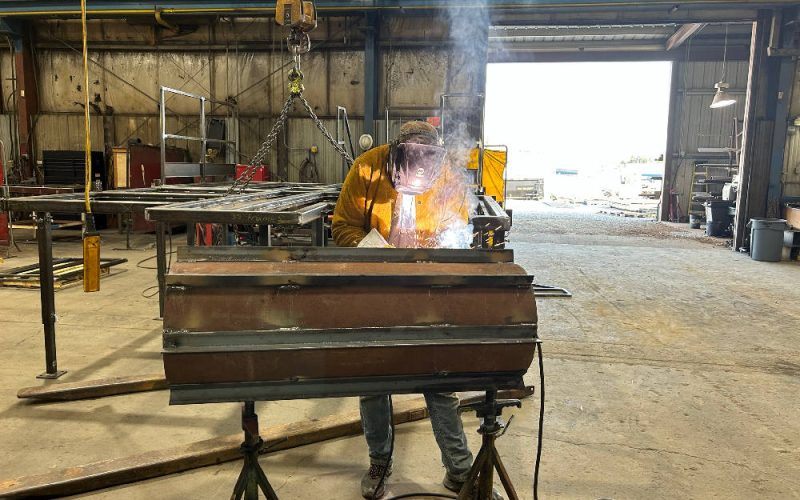
Welding in Drayton Valley is most useful when done with precise CNC machining. This is because many repairs need both accurate geometry and new material. In factories, parts don’t often break cleanly. Wear can be uneven, bores can become out of round, shafts can get scratches, and mounting surfaces can move when they are hot or heavy.
When many of those problems occur simultaneously, welding or machining alone isn’t usually enough. Welding can fix broken things, but it doesn’t always restore accuracy. CNC machining can restore accuracy, but it might remove too much material if the part is already too small or damaged. Used together, welding restores the structure and machining restores the fit, so the repaired component can return to service with predictable results.
Why Complex Repairs Often Require Both Machining and Welding
A repair can look straightforward until the part is inspected closely. Many failures involve multiple problems that interact, such as wear that creates misalignment, misalignment that accelerates further wear, or distortion that makes fit-up difficult during reassembly. That is where a mixed method is valuable, because you can address strength and geometry in a controlled sequence rather than trying to solve everything with a single process.
The goal is not perfection for its own sake; it is function. If a bore needs to locate a bearing, a face needs to seal, or a shaft needs to run true, the repair must meet those requirements, or the issue will return quickly.
A Practical Workflow That Keeps Repairs Measurable
Complex repairs usually succeed because they follow a structured process, even though its details vary between jobs. Work typically begins with a comprehensive inspection to identify wear, cracks, and distortion affecting dimensions essential to keeping equipment operating efficiently; then, tolerances and reference points must be established accordingly, guaranteeing accurate repairs that rely solely on exact datums rather than guesswork.
Machining and welding in Drayton Valley work together once the plan is made. Machining is often performed first to remove damaged metal and create a clean area for welding. Welding adds new material, thereby strengthening the structure. Finally, machining makes the part the exact size it needs to be. A final check for alignment, flatness, and runout ensures the part will fit properly when installed, not just be close enough.
How CNC Machining Supports Better Welding Results
CNC machining isn’t only the last stage. It can also make welding more reliable by improving setup and preparation. Clean, consistent weld prep is vital because it helps control penetration and minimizes the chance of faults caused by contamination or uneven gaps. Also, machining can create genuine, flat reference surfaces, enabling parts to be clamped and positioned exactly. This is important in cases where distortion would otherwise develop.
Machining can make pieces that fit together properly before welding. This is useful when a repair involves sleeves, bushings, or mating parts. This makes it less likely that alignment problems would come up after the part has been repaired, and the only option is to do further work.
How Welding Makes Precision Machining Possible Again
In many instances, traditional machining alone cannot resolve a component’s issue without sacrificing it; welding provides an option to restore material, so the component can be machined back to its proper size rather than cut down to meet functional limitations. This often occurs with worn shafts, damaged bearing fits, or elongated bores where additional material must be added before finishing is possible.
Welding can also be essential when cracking or structural damage occurs, necessitating repairs before accurate machining can take place; otherwise, parts could continue to move, flex, or break under load, causing assembly difficulties. Drayton Valley welding repair work often covers material restoration, while Drayton Valley machining handles dimensional control for easier assembly processes.
Common Repair Scenarios Where Both Processes Matter
Many repair jobs benefit from using welding and CNC machining together, particularly if parts must fit back into an assembly with tight tolerances. A worn shaft, for instance, may need to be built up and finish turned to restore its bearings and seals to their correct fits; while damaged housing or bores can be rebuilt to their original design specifications; cracked brackets, mounts, and flanges need structural repair before CNC machining to achieve true mating surfaces that can take loads.
Reducing Downtime by Keeping the Process Coordinated
Handoffs, repeated measurements, and finding fit problems late can all cause delays. When machining and welding are done simultaneously, the repair remains consistent from the initial measurement to the final inspection. You can keep the same reference points, make judgments sooner, and the number of times a part needs to be reset or worked on can go down.
When operators seek the right balance among cost, lead time, and dependability, having machining and welding work together helps them make better decisions about whether to fix, rebuild, or make a new part when availability is unknown.
| Repair Challenge | Welding Contribution | CNC Machining Contribution |
| Worn shaft or journal | Builds up missing material | Finishes the diameter and surface for bearings and seals |
| Out of round bore | Restores material where needed | Bores to size and restores alignment |
| Cracked mount or bracket | Restores strength and continuity | Machines mating faces for fit and flatness |
| Damaged flange face | Rebuilds edges or sealing area | Faces to a true plane and suitable finish |
| Distorted locating features | Reinforces or rebuilds features | Re-establishes datums and corrects geometry |
When a repair involves both strength and geometry, the best results usually come from using welding and CNC machining in a planned sequence. That is how you get a component that assembles correctly, holds alignment, and performs under load without relying on trial and error.
For local heavy equipment and industrial repairs, welding in Drayton Valley is strongest when it is paired with precision machining, so complex problems can be rebuilt with control and finished to the dimensions the equipment actually needs.