A Reliable Machine Shop in Drayton Valley Keeps Heavy Equipment Moving When Downtime Gets Expensive
Key Takeaways
- Equipment downtime in Alberta’s industrial sectors costs far more than the repair itself when you factor in lost production and labour.
- Local machining, welding, and fabrication services can restore worn or damaged components faster than waiting for replacement parts.
- CNC machining, line boring, and hydraulic cylinder repair address the root causes of failures rather than masking them.
- Older or specialized equipment often depends on custom-machined parts that are no longer available through standard suppliers.
- Response time is a competitive advantage, and proximity to a capable shop directly affects how quickly operations recover.
When a piece of heavy equipment fails in the middle of a job, the cost of stopping is immediate. Labour sits idle, schedules shift, and the pressure to get moving again leads operators to make quick decisions that do not always serve the equipment well. For contractors, oilfield operators, and industrial crews working across the Brazeau County region, having access to a machine shop in Drayton Valley is not a convenience. It is a practical part of staying productive in an industry where margins are tight and timelines matter.
Heavy equipment failures rarely happen in isolation. A worn shaft leads to misalignment, which accelerates bearing wear, which eventually causes a more serious breakdown. The pattern is familiar to anyone who has managed a fleet or run equipment through tough conditions. Catching and repairing issues early, with the right equipment and skilled tradespeople, is what separates efficient operations from those that spend the season fighting breakdowns.
Why Downtime Costs More Than Most Operators Account For
The repair bill is usually the easiest part to measure. The larger cost is what happens while the equipment is not working. When a service rig hydraulic system fails, the rig stops, the crew loses productive hours, the client may need another solution, and the machine sits until the right parts, tools, or technicians are available. If qualified repair support is hours away, the delay becomes even more expensive.
In Alberta’s oilfield and construction sectors, downtime is rarely limited to the cost of fixing one failed part. It can affect completion timelines, create scheduling conflicts, increase labour costs, and put extra stress on equipment that continues running longer than it should. For companies operating pumpjacks, excavators, service rigs, transport trucks, or other heavy equipment, one extended breakdown can cost more than several planned repairs handled at the right time
What Machining Actually Solves That Replacement Parts Cannot
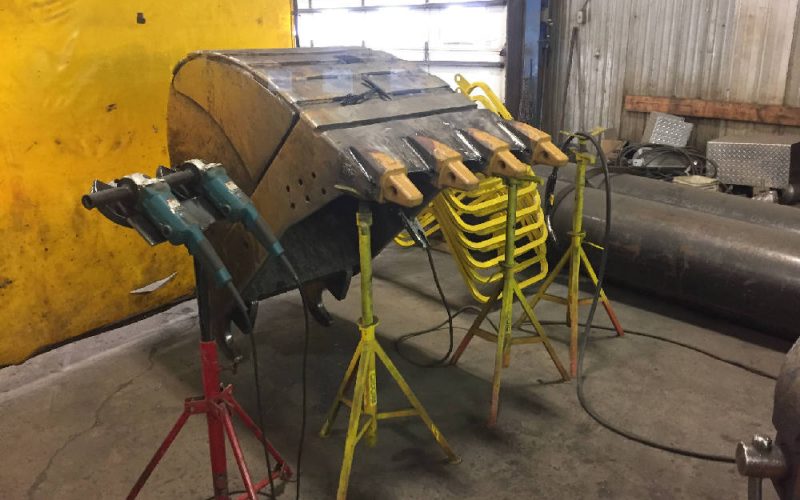
Replacement parts are a good option when they are available, priced reasonably, and can arrive before the delay becomes a bigger problem. That is not always the case with older machines, specialized equipment, or components that are hard to source. Machining gives operators another path. A worn bore can be brought back to proper fit. A damaged shaft can be rebuilt with welding, then machined back to the correct tolerance. A hydraulic cylinder with internal scoring may be repaired and resealed rather than replaced entirely.
Big West Machine and Welding offers in-house CNC machining, manual lathe and milling, in-house line boring, and hydraulic cylinder repair and manufacturing. That range of services helps prevent complex repairs from being sent among multiple shops, which can slow the process and increase the risk of miscommunication. Keeping the work under one roof supports a more efficient repair process from inspection through final fitment.
For heavy equipment operators who rely on a machine shop in Drayton Valley for urgent repairs, that combination of services is important. A 4-axis CNC lathe with live tooling and a sub-spindle enables precise machining of more complex parts. Line boring can restore worn pivot points and pin bores on excavators, loaders, and boom assemblies at the component level, without full machine disassembly in every situation.
Welding and Fabrication as Part of the Repair Process
Machining and welding are most effective when they work together. Many repairs begin with welding to restore lost material, correct a crack, or reinforce a weakened section. Once the material is added, machining can restore the area to precise dimensional tolerances. This sequence is important because machining a surface before it has been properly welded can produce a part that appears correct but lacks the structural integrity to withstand operational loads.
CWB certified welding ensures that the welds used in a repair meet established standards for strength and quality. In industries where structural failure can cause severe safety and operational hazards, certification is not a formality. It represents the difference between a repair that holds and one that fails again under load.
Fabrication services take this further by enabling custom brackets, mounts, frames, and structural components to be built from on-hand materials. When a part is no longer available from the original manufacturer, skilled fabricators can produce a functional equivalent that fits the application and performs to the same standard.
Field Failures and the Role of Mobile Response
Not every equipment failure happens near a shop. Breakdowns occur on remote sites, in pipeline right-of-ways, on construction projects far from town, and under conditions that make hauling equipment back to a shop impractical or impossible. Mobile welding addresses this problem directly by bringing certified repair capability to the job site.
A cracked boom, a fractured frame weld, or a failed structural component can often be repaired on-site rather than requiring a full equipment haul. That distinction saves time and avoids the additional wear and logistics cost of moving heavy machinery that should not be operating in its current condition.
For planned outages, plant shutdown maintenance crews coordinate repair sequencing across multiple systems during the shutdown window, reducing the total time the facility is offline. The ability to run machining, welding, and fabrication work concurrently, with crews familiar with industrial plant environments, prevents the schedule from being compressed at the end, when pressure is at its peak.
Specialized Repairs That Require Both Precision and Experience
Some repairs fall into a category where general capability is not enough. Pumpjack repairs and services, triplex pump overhauls, PTO and gearbox repairs, and service rig repairs and rig-ups each require a working knowledge of how the system functions, not just the ability to machine or weld the individual components.
A machine shop in Drayton Valley that has worked on oilfield equipment across the region brings a level of applied experience that a general machine shop does not always have. Knowing why a component failed, not just what it looks like when it does, is part of diagnosing the actual problem and repairing it in a way that reduces the likelihood of recurrence.
Common Equipment Failures and How They Are Addressed
| Equipment Type | Common Failure | Repair Approach |
| Service Rig | Hydraulic cylinder failure | Cylinder rebuild, seal replacement, bore restoration |
| Excavator / Loader | Worn pin bores, misalignment | In-house line boring, pin and bushing replacement |
| Pumpjack | Structural fatigue, worn components | Welding, machining, and pumpjack-specific servicing |
| Transport Truck | Frame cracks, structural weld failure | CWB certified welding, fabrication, rig-up support |
| Triplex Pump | Worn plungers, valve wear, seal failure | Full pump overhaul, precision component machining |
| Heavy Equipment (General) | Shaft wear, bore damage | CNC machining, shaft buildup welding, and dimensional restoration |
When operations depend on equipment that cannot afford extended downtime, the proximity and capability of local shops has a direct effect on how operations progress. A shop that can machine, weld, fabricate and respond in the field without outsourcing critical steps can drastically shorten time between failure and return to service – an invaluable service for industrial operators, oilfield crews and contractors working in Drayton Valley area. This combination of speed and capability often determines how a season runs smoothly.
Alberta conditions place significant demands on heavy equipment, putting strain on components. Working with an experienced machine shop in Drayton Valley gives you access to the resources needed for timely failure repairs, restoration of worn components back to specifications, and keeping equipment operational throughout its season. No more waiting on parts from distant shops.