
Hydraulic Cylinder Repair in Alberta Becomes Critical During Peak Field Operations
Hydraulic cylinder repair in Alberta becomes critical when the pace of field operations picks up and equipment is pushed to its limits. Whether it’s oil patch service rigs running through the night, construction crews racing against a short building season, or heavy equipment working through unpredictable weather, hydraulic systems absorb enormous stress during peak periods. When a cylinder fails in the middle of a job, the consequences go well beyond the repair itself. Downtime stacks up fast, schedules slip, and the pressure on the entire crew intensifies.
Alberta’s busiest work seasons tend to arrive fast. Construction crews have a short window to get projects moving, oilfield demand can rise quickly, and machines that spent part of the winter sitting idle are often put straight back into long, heavy days. Hydraulic cylinders on excavators, service rigs, loaders, and transport equipment take on that pressure every shift. Over time, seals wear down, rods can become scored, and internal parts may start to lose their proper fit. If the equipment is returned to steady service without a thorough inspection, the risk of failure in the middle of a job increases.
A few common conditions can speed up cylinder wear during peak operations:
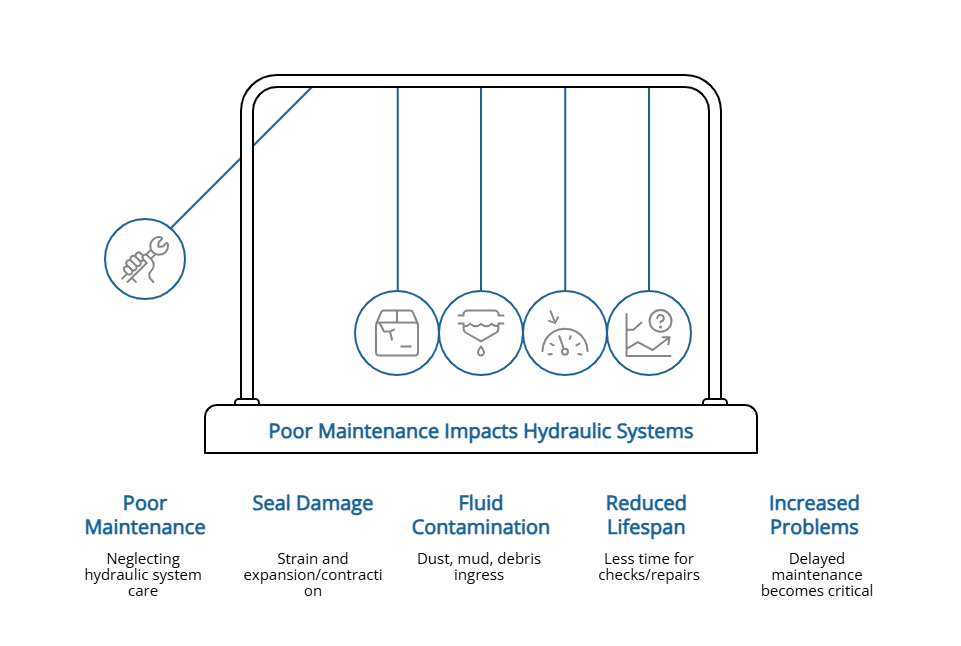
- Frequent cycling puts steady strain on seals, rods, and end caps
- Cold mornings followed by warmer afternoons can cause seals to expand and contract
- Dust, mud, and debris from job sites can contaminate hydraulic fluid and damage internal surfaces
- Longer operating hours leave less time for routine checks and minor repairs
- Maintenance that was delayed during the off-season can become a problem once workloads increase
Hydraulic cylinder problems are not always obvious at first. A small leak on the outside of the cylinder may seem like something that can wait, but it can point to deeper wear inside the system. Once internal damage starts, performance can drop quickly, especially under heavy loads. Crews that overlook the early warning signs may find themselves dealing with a full cylinder failure in the field, far from the shop, while the rest of the job is waiting.
What a Cylinder Failure Actually Costs an Operation
A failed hydraulic cylinder does not just stop one function on a machine. Depending on the equipment and its role, it can ground an entire piece of equipment, halt a multi-crew operation, or create a safety hazard that requires everything to stop. For operations running tight margins and tighter timelines, that kind of interruption translates directly into lost revenue, penalty clauses, and frustrated clients.
The cost of completing a hydraulic cylinder repair in Alberta is almost always lower than the cost of extended downtime. A cylinder that can be resealed, honed, and returned to service quickly represents a fraction of what a multi-day shutdown costs in labor, missed production, and equipment rental. The challenge is finding a shop that can handle the repair accurately and fast, without a long wait for subcontracted machining work to come back.
Repair facilities do not all operate with the same setup. A shop that offers in-house machining, honing, and precision seal fitting can handle the kind of damage a simple seal replacement will not fix. Scored rods, out-of-round bores, and damaged end caps need proper machining to be brought back to their exact specifications. If a shop lacks this equipment on site, parts have to be sent out to specialized subcontractors. That extra step can easily add days to your repair timeline.
Big West Machine and Welding manages hydraulic cylinder repair in Alberta, along with full manufacturing entirely in-house. The facility has the machining capacity to work on a wide variety of cylinder sizes and types. Having all the work completed under one roof makes a noticeable difference when a project cannot afford to wait for parts to return from a third-party shop. It is incredibly valuable for operations that need a fast turnaround to stay on track.
During the busiest times of the year, relying on a repair partner with complete in-house equipment is an operational necessity. Spotting wear before it leads to a breakdown, responding fast when problems occur, and partnering with a shop that handles repairs without outsourcing are the best ways to keep field crews productive when schedules are tight.